It is impossible to pinpoint an exact place or moment when capitalism began. Capitalism is a process, not a discrete historical event with a beginning and an end, and it did not drop fully formed into a particular location. Even today, no society is organised along fully capitalist lines, and some have argued that a fully capitalist world is a theoretical impossibility. Efforts to isolate one patch of soil as capitalism’s place of origin—Florence, Barbados, Amsterdam, Baghdad, the southern English countryside, or Manchester, for example—have all proved insufficient. That is because the capitalist revolution had always been a process that drew energy from myriad sources. The first springs fed into rivulets that over time became meandering and ever more powerful streams. As these streams moved through time and space, they encountered a world often hostile to their further development—rivulets dried out; brooks met sandbanks and evaporated; and even the mightiest streams encountered mountain ranges that stopped their flow and forced them to take on new contours. Shape-shifting through the centuries, and against all odds, this novel logic of economic life—one that centred less on markets as such and more on the growth of capital, that is, money and goods dedicated to the production of more money and thus more capital—gained power.
Given capitalism’s winding course, one reasonable place to start is with the first capitalists—merchants—who played a critical role in propelling capital’s revolutionary recasting of economic life on Earth and personified its logic. While we do not know precisely when and where merchants of this particular bent emerged first, there surely was an unusually vibrant and early community of traders who, in the twelfth century, plied their business in the port of Aden, a port that became, according to its most important historian, Roxani Margariti, the heart of Indian Ocean trade. Capitalism did not “break out” in Aden in 1150, but the city was one among a number of notable places that linked together to form the stream that became the river and ultimately the flood.
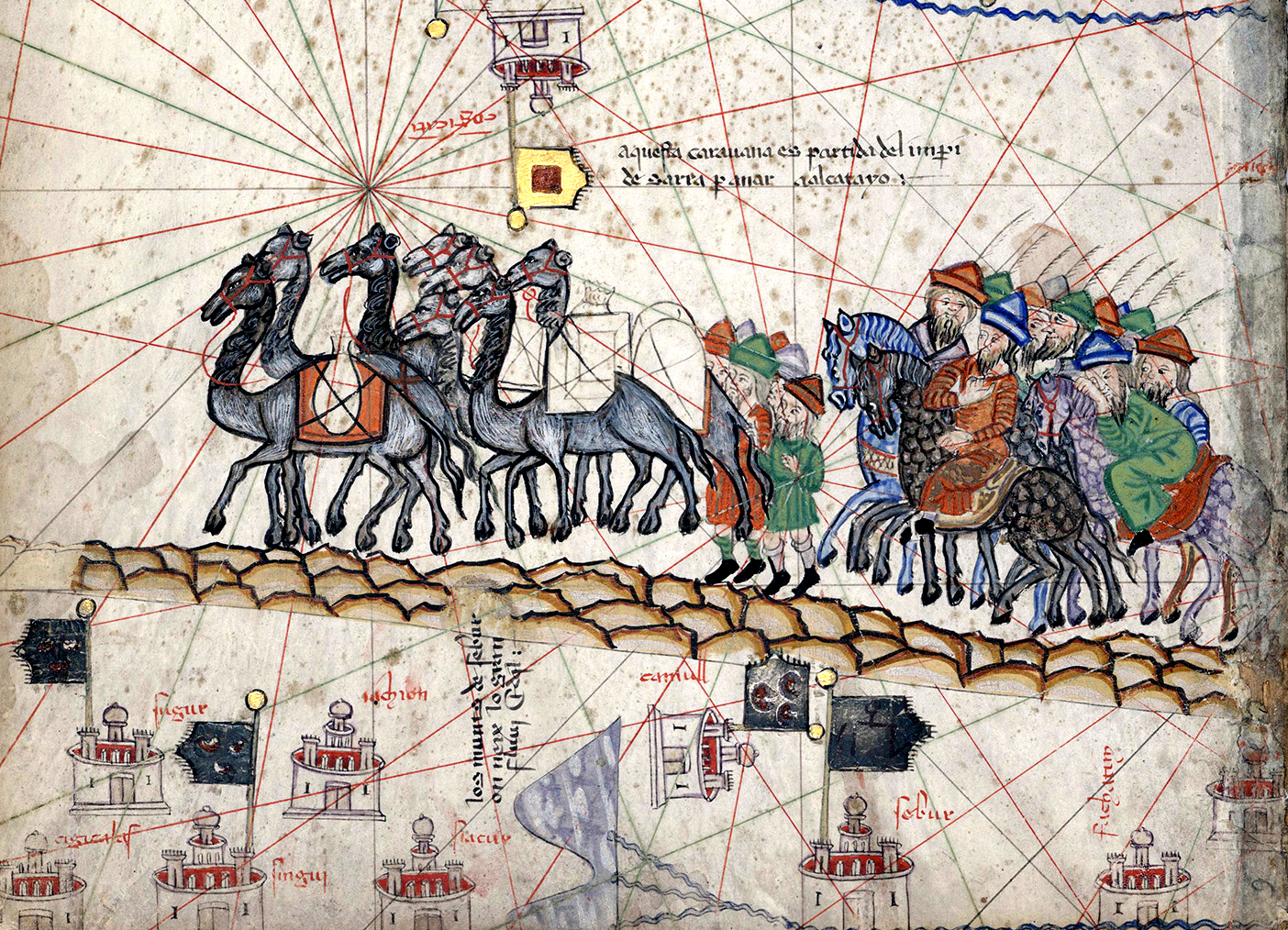
Its merchants sent ships to distant ports across dangerous oceans, brought the riches of Asia, Africa, Arabia and Europe back to their storage sheds, then distributed them to the far reaches of the known world, buying low and selling dear, providing shipping services, exchanging currencies, offering credit and sometimes financing and even organising the production of agricultural commodities and manufactured goods.
Linking the Mediterranean to the Indian Ocean (and beyond) by sea and land, Aden was a world city constructed by people whose mundane activities, majestic in their sheer scale, included assembling cargoes, inspecting wares, haggling over prices, supervising the construction of ships, observing remote markets, gathering information and, not least, raising capital. As unlikely as it may seem, these banal activities, performed intensively, showed qualitatively new, emergent abilities—early, scattered sparks of the revolution to come.
This is an edited extract from Sven Beckert’s new book Capitalism: A Global History, published by Penguin.
This article originally appeared at CapX.
The post Where Did Capitalism Really Begin? was first published by the Foundation for Economic Education, and is republished here with permission. Please support their efforts.